
For beginners, prostate stimulation is best approached as exploration—not a test to pass or a result to achieve. People’s bodies and preferences differ. You can be curious, take your time, and decide at any point that it is not for you.
What prostate stimulation means
The prostate is a small gland inside the pelvis. Some people enjoy gentle external or internal stimulation in the surrounding area; others do not find it pleasurable. The sensation, if any, is personal and may not resemble what you expect from other kinds of sexual touch.
Online stories can make a particular response sound universal. It isn’t. There is no reliable promise of orgasm, a specific sensation, or a particular timeline, and exploring pleasure is not a treatment for a health condition.
Before you begin: make room for comfort
Give yourself privacy, enough unhurried time, and permission to pause. If you are exploring with a partner, talk beforehand about what feels okay, what is off-limits, and how either of you can stop without needing to explain. Consent and comfort stay active throughout.
- Approach the experience with curiosity rather than a performance goal.
- Move slowly and pay attention to how your body responds.
- Use lubricant for anal toys or other anal play; Planned Parenthood recommends lubricant to help reduce friction.
- If using an anal toy, choose one with a flared base or another secure way to retrieve it.
These are general educational suggestions, not individualized medical instructions. Read the toy’s own care and use information, and ask a clinician about health questions that are specific to you.
During exploration
Start with what feels manageable and stay in control of the pace. A new sensation can take time to interpret, but pain is not something to push through. Pause or stop if you feel pain, increasing discomfort, or simply change your mind. Nothing about being a beginner obligates you to continue.
It may help to check in with yourself rather than constantly evaluating whether you are doing something “right.” You can stop, return another day, choose a different kind of touch, or decide this form of exploration is not a fit. All are valid outcomes.
Keep expectations grounded
There is no single beginner experience. Some people feel little; some enjoy the sensation; some need time to understand what feels comfortable. Arousal, relaxation, context, and individual anatomy can all shape an experience. No guide can guarantee a particular response.
Medical claims deserve particular care. Cleveland Clinic notes that evidence does not support prostate massage as a medical treatment or a way to improve prostate health. Pleasure exploration and medical care are different things.
When to pause and ask for help
Stop if you experience pain or bleeding. Contact a clinician for persistent or concerning symptoms, questions about an existing condition, or advice about what is appropriate for you. Seek urgent care for severe symptoms. This guide cannot diagnose or replace a healthcare professional.
Product examples for beginners
Affiliate disclosure: RewireGuide may earn a commission from these links at no extra cost to you. These are examples to compare, not individual recommendations; check each maker’s sizing, care, and use instructions.
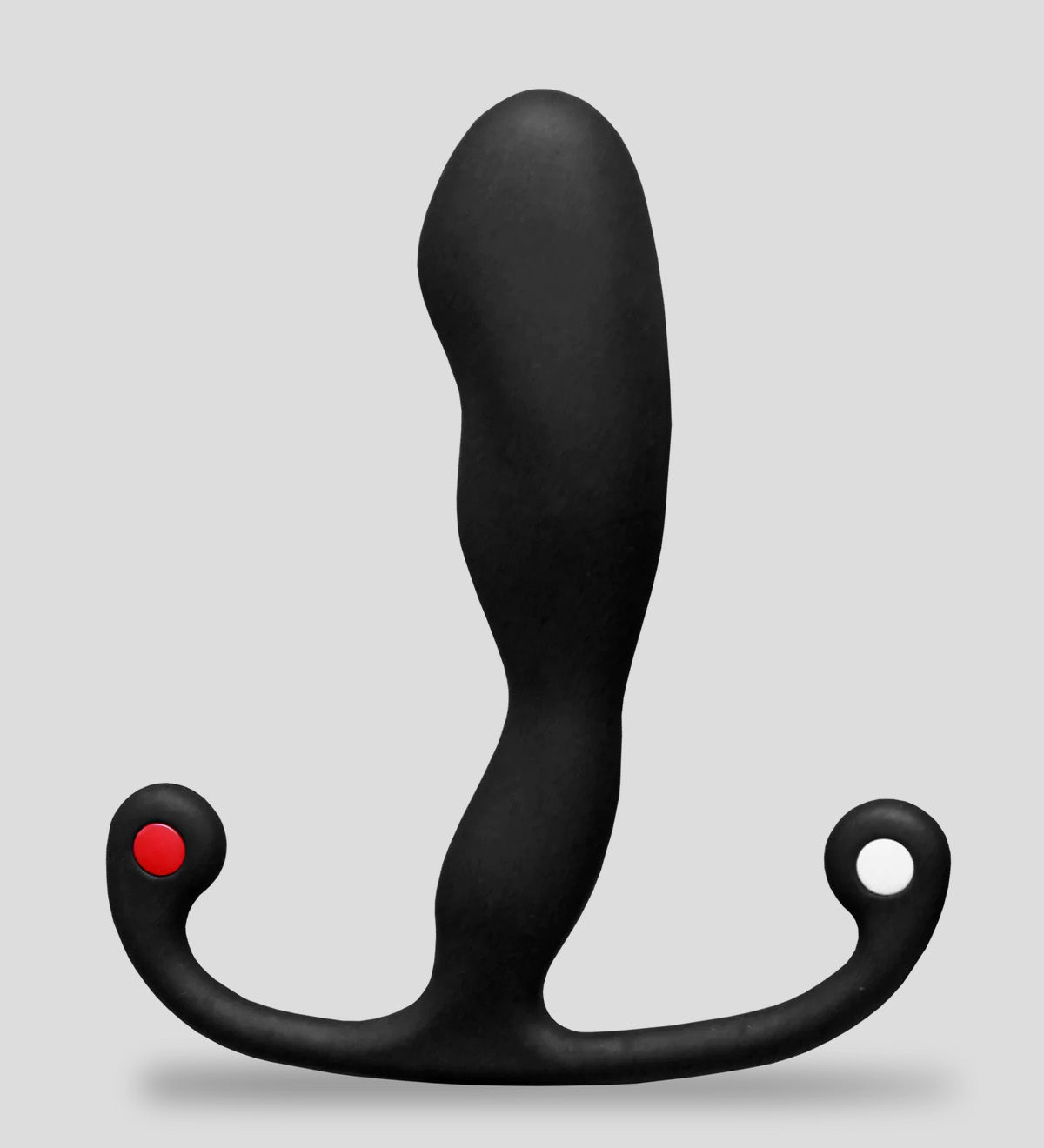
Aneros Helix Syn Trident
Silicone-coated design with an angled head; Aneros lists it for users of all experience levels.
View product ↗

Aneros Helix Syn V
Vibrating model with eight patterns and three speed settings, according to Aneros.
View product ↗
Aneros Vice 2
Vibrating massager with wireless remote, 18 patterns, and four speed settings.
View product ↗Further reading
The practical suggestions above are educational context; these sources support the specific safety and medical-evidence statements:
- Planned Parenthood: Sex toys — use lubricant with anal toys and choose toys with a flared base or another retrieval feature.
- Planned Parenthood: What do I need to know about anal sex? — comfort and pain guidance.
- Cleveland Clinic: Prostate massage — evidence and possible risks.